Summary: This story profiles REACH Health Services, a Baltimore substance use disorder clinic that serves a broad range of patients, with specialized efforts focused on older adults. The clinic combines opioid use disorder treatment with support for common medical and social needs that often complicate recovery.
This article is reprinted with permission from Tradeoffs, where it was originally published on February 12, 2026. The original version can be found here.
The pain in Renee Gray’s right hip had gotten so bad, not even the heroin could help.
Through nearly three decades of addiction to heroin and cocaine, Gray’s physical health — her joints, her blood pressure, her teeth, her vision — had been an afterthought.
Now, on this October night in 2023, Gray’s daughter and granddaughter watched as the then-64-year-old writhed on the ground — high and in agony.
“It hurt me so bad that my granddaughter [had] seen me like that on the floor,” Gray says.
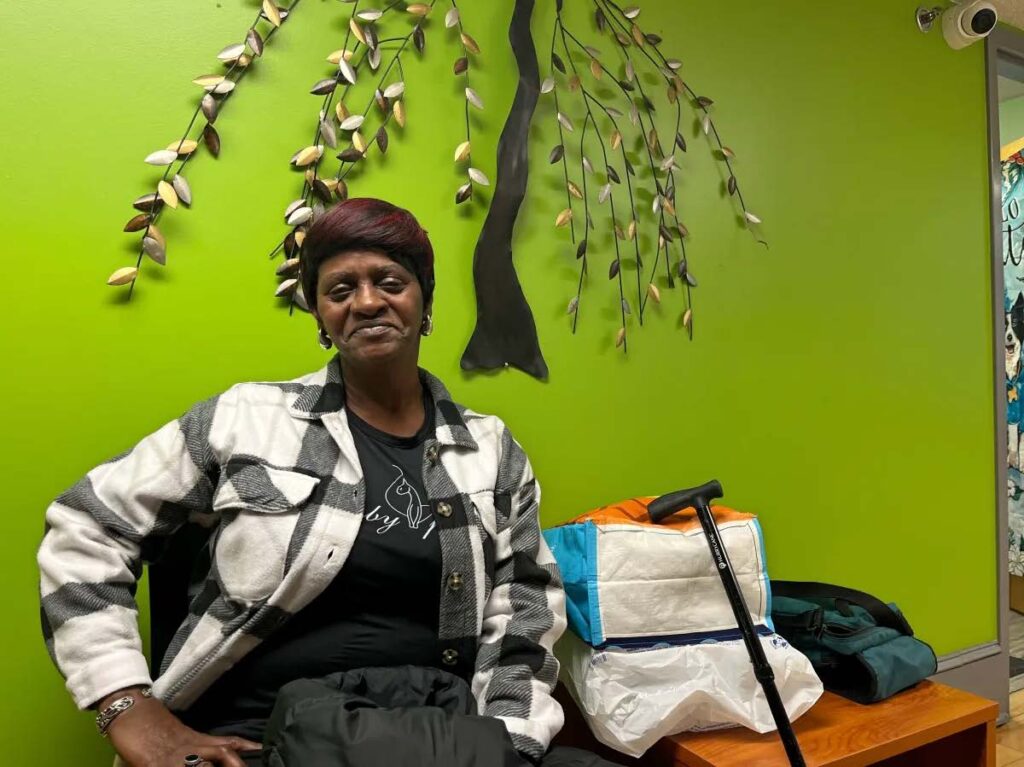
Just 72 hours later, Gray walked through the doors of REACH Health Services, a methadone clinic in Baltimore that primarily serves older adults grappling with opioid addiction.
Nearly 20,000 people over the age of 55 died of an opioid overdose in 2023, and the number of seniors living with opioid addiction has climbed in recent years to roughly 1 million. Like Gray, many have other health problems such as arthritis, diabetes and heart failure. Social issues like housing, hunger and loneliness also pose increasing challenges for many people as they age.
Doctors, nurses, researchers and policy experts say many of these older patients are falling through the cracks of a health care system that is not built to meet their needs. Those same experts say there are clear ways to fill in those cracks, and this clinic in Baltimore offers one model for how to do that.

Many patients at REACH are like Gray: aging, addicted and low-income. Malik Burnett, the clinic’s medical director, believes that combination puts people in unique danger.
“If you have unmanaged substance use disorder and multiple chronic medical conditions, none of which are getting managed, you’re just going to die,” he says.
Much of REACH’s work to keep their patients healthy and alive can be boiled down to three key steps: treat addiction, repair trust and coordinate care… Read More
A prescription for dismal rates of addiction treatment
The first step that REACH takes when a new patient like Gray arrives is to start them on medications for their opioid addiction.
One federal study found that less than 16% of people on Medicare with opioid addiction receive medications such as methadone or buprenorphine, which are proven to save lives and help people stay in recovery. That rate can sink even lower in corners of the health care system that older adults use more often, like nursing homes and hospitals.
REACH finds ways to smooth some of the bumps, like a lack of transportation, that can derail older patients. For example, they’ve taken advantage of a recent regulatory change that allows patients on methadone to bring more doses of the medication home rather than having to pick them up in person nearly every day.
Finally, REACH offers services beyond medication, like a peer support group specifically for older patients and a mental health therapist for those with more serious behavioral health needs.
Gray looks forward to her twice-weekly support group so much, she says, that she lays out her outfits for those days every weekend as she does her laundry.
Rebuilding bridges to the health care system
As patients settle into addiction treatment, REACH staff work on rebuilding people’s trust in the rest of the health care system. Many people with addiction avoid getting care, in part because bad experiences with doctors and nurses haunt them.
Gray says she used to hate going to see her primary care physician because “she would stare at me like I was dirt or something.”
In one recent study that surveyed hundreds of doctors and dentists, 34% admitted they prefer to avoid patients with opioid use disorder. Just 9% said they felt the same about patients with HIV or depression.
REACH employs two staff members who have lived experience with addiction — known as peer specialists — to help patients build comfort and confidence navigating the very system that has often spurned them. One of those specialists, 61-year-old Phyllis Lindsay, works closely with Gray.

“She sees that I’ve been through this process,” says Lindsay, who has been in recovery from heroin addiction for nearly 20 years. “I take care of myself. I get checkups. And she’s like, if Phyllis can do it, then I can too.”
Together, the pair have gone to get Gray’s eyes checked and her teeth pulled — two procedures Gray had been dreading.
REACH Executive Director Vickie Walters says the clinic tries to foster a culture that is more trusting and less paternalistic toward their patients. For example, the clinic maintains an “open door policy,” meaning patients can return no matter how many times they’ve relapsed. That’s in stark contrast, she adds, to policies she’s seen at other treatment facilities, like one place she used to work that cut ties after three tries.
“It was an arbitrary rule that was created by a system that really looked at treatment like punishment almost.”
‘A needle in the haystack’
As patients grow more aware of their health needs and more comfortable with the health care system, REACH staff flip into care coordination mode.
They chase down referrals to specialists, arrange transportation for patients to get to the doctor and decipher hospital discharge instructions. Staff even dip their toes into social work, linking patients up with food stamps and affordable housing.
“We see our role as getting people connected to the care that’s already in the community,” Walters says. “Helping to facilitate that, helping them to follow through.”
While many people turn to family and friends for that sort of support, peer specialist Phyllis Lindsay says many of her clients lack those ties to lean on.
“When you’ve been addicted for a long time, people disown you and don’t want to have anything to do with you,” she says. “So you have nobody to reach out to for help.”
A growing body of evidence from hospitals and clinics treating addiction, as well as other medical conditions, shows this type of coordination work can improve people’s health, get them into recovery, and in some cases, even save money. That’s got more health insurers willing to pay for these services — and more clinics and hospitals willing to add them.
Still, researcher Lisa Clemans-Cope, a senior fellow at the Urban Institute, says there are fewer than 10 states where methadone clinics like REACH can get paid to do this extra work — and even in those states, many choose not to.
“Comprehensive care for these incredibly complex patients is definitely a needle in the haystack kind of thing,” she says.
Limited funding stymies progress
A lack of investment, according to the 20 people Tradeoffs interviewed for this story, is one of the biggest barriers to improving care for older adults with opioid addiction.
They pointed to a wide range of gaps that result from insufficient funding — from a lack of proper addiction training and staffing at nursing homes to a shortage of affordable housing for seniors, which can destabilize people’s health and recovery.
Policy experts did highlight one potential pot of new money: the billions of dollars heading for state and local government coffers as the result of legal settlements with opioid drugmakers and distributors over those companies’ roles in the overdose epidemic. One state, Connecticut, has already directed some of their dollars toward expanding access to methadone in nursing homes.
On the other hand, experts flagged recent federal cuts to Medicaid and mental health grants, along with widespread state budget troubles, as potential signs of a rocky fiscal road ahead.
Further starving an already underfunded field would be shortsighted, says Maggie Lowenstein, assistant professor and addiction medicine physician at the University of Pennsylvania Perelman School of Medicine.
“ When you do care badly, that’s also really expensive,” she says.
Researchers estimate that the federal government spends north of $10 billion a year for people on Medicare with unmanaged opioid addiction.
Urgency to innovate despite imperfect evidence
Doctors and researchers have yet to reach a clear consensus on the best way to deliver higher quality care to people aging with addiction. REACH has never completed a rigorous evaluation of their program. Some studies of other similar approaches have shown promising results, but Lowenstein cautioned that what works in one hospital or clinic may flounder in another.
Still, Lowenstein has seen enough positive data as a researcher — and witnessed too many opioid overdoses and deaths as a physician — that she doesn’t need to wait for what she called “that one perfect study.”
“ There are some things that we really know work, and then there are some things that are probably never going to be studied fast enough to keep up with the pace of how this crisis evolves,” she says. “But it’s incredibly important to do our very best to apply what we do know works urgently so that we can save lives and help people get into recovery.”
Renee Gray believes deeply that she is one of the lives this work has saved.
With help from REACH, she has been off of heroin for 14 months. She’s lowered her blood pressure and nearly kicked her smoking habit. She even moved into an apartment all her own.
Next on the list this year: finally getting her right hip replaced.
Credits
Written by:
Leslie Walker
&
Dan Gorenstein
Photography: Dan Gorenstein / Tradeoffs
Originally published on: Tradeoffs (February 12, 2026)